Understanding How Driving Modes Impact Range in the Cadillac Lyriq
Electric vehicles (EVs) are full of options that change how the car feels, drives, and — crucially — how far it goes. If you’re curious about the Cadillac Lyriq and whether its driving modes change range or battery usage, you’re in the right place. This article breaks it down in plain language, explains how each mode affects efficiency, and gives practical tips to get the most miles from a charge.
Quick answer (TL;DR)
Yes — the Cadillac Lyriq’s driving modes do affect range and battery usage. Different modes change throttle response, torque delivery, regenerative braking strength, and climate/auxiliary behaviors. These adjustments alter how quickly the battery drains and, therefore, the estimated driving range. The impact can be noticeable in real-world driving: conservative modes can add meaningful miles, while sporty modes will reduce range.
What “driving modes” actually change in an EV
Before we look at the Lyriq specifically, it helps to understand what driving modes typically control in electric cars:
- Throttle response: How quickly the car accelerates when you press the pedal.
- Power delivery mapping: Limits or unlocks peak motor torque and power.
- Regenerative braking strength: How aggressively the car recovers energy when you lift off the accelerator.
- Climate system behavior: Some modes economize heating/cooling to save energy.
- Chassis/steering tuning: Usually affects driving feel more than battery use, but heavier steering or suspension settings can have a tiny effect on efficiency.
Because these things change how much energy the motor draws or how often the battery recovers energy, they change battery usage and therefore range.
Cadillac Lyriq: what the modes are and what they do
Cadillac positions the Lyriq as a premium electric SUV with multiple drive selections to match different situations. While specific naming and exact behavior can vary by model year and software update, the typical set includes:
- Touring / Adaptive / Comfort: Balanced or comfort-oriented setting. Softer throttle, moderate regenerative braking, efficiency-minded.
- Sport / Performance: Sharper throttle, more immediate power delivery, reduced energy-saving measures — better acceleration, worse range.
- Tour / Range / Eco: Prioritizes energy saving. Softer throttle, more aggressive regeneration, and limits to nonessential power draws to extend range.
- Individual / Custom: Lets the driver combine settings (e.g., Sport throttle + strong regen + eco HVAC).
Each of these changes energy consumption in predictable ways: sportier settings use more power; eco/range settings use less.
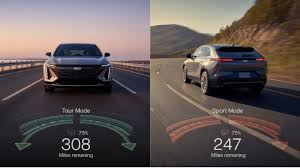
How big is the difference — real-world expectations
The exact range change depends on driver behavior, terrain, and conditions. But here are reasonable, realistic expectations:
- Eco / Range mode vs. Sport mode: Expect anywhere from a few percent to 10–15% difference in real-world range depending on driving style and route. In city driving with lots of stop-and-go, aggressive regen in Eco can significantly improve mileage; on steady highway driving, differences narrow.
- Tour/Comfort vs. Sport: Sport may shave 5–10% off your range in mixed driving.
- Regenerative braking settings: Strong regen can recover noticeable energy in urban driving — sometimes adding several extra miles compared with low-regen settings over the same route.
Bottom line: on a 300-mile estimated range, a 10% swing is 30 miles — which matters for planning.
Why modes change battery usage (simple physics)
- Acceleration costs energy: Faster acceleration requires greater instantaneous power from the battery. Sport modes encourage more acceleration.
- Regeneration returns energy: Stronger regenerative braking captures kinetic energy when slowing, returning it to the battery and improving net efficiency.
- Systems load matters: HVAC, seat heating, and other accessories draw from the battery. Some modes limit or alter their behavior to save energy.
- Motor/inverter mapping: Modes can constrain or unleash the motor’s power band. Operating at higher power levels generally reduces efficiency.
Real-world examples of where modes matter most
- City driving: Eco/Range modes shine. High regen means more recovered energy at each stop — noticeable range improvements.
- Hilly routes: Sport mode might feel fun, but climbing aggressively will tax the battery. Conversely, using regen on descents recovers energy — careful use of mode and regen can help.
- Highway cruising: Once at constant speed, the drivetrain’s efficiency dominates. Modes still matter (a more conservative throttle map and reduced accessory draw help), but differences shrink compared to stop-and-go traffic.
- Cold weather: All modes will show reduced range in freezing temperatures due to battery chemistry and HVAC load. Eco modes can mitigate this slightly but won’t eliminate the temperature penalty.
Tips to maximize Lyriq range (with modes)
- Use Range/Eco mode for long trips — it smooths throttle and maximizes regen.
- Set higher regenerative braking if you drive in the city — it recovers energy on every deceleration.
- Avoid Sport mode for daily commuting unless you need the performance — the fun comes at a cost to range.
- Precondition while plugged in — heat or cool the cabin before unplugging so the energy comes from the charger, not the battery.
- Reduce auxiliary loads — avoid unnecessary climate extremes, use seat heaters rather than full cabin heat when appropriate.
- Drive smoothly — regardless of mode, smooth acceleration and anticipating stops are the single best ways to improve range.
- Check tire pressure and reduce drag — low tire pressure and roof racks hurt efficiency more than you might expect.
How the Lyriq displays the effect of modes
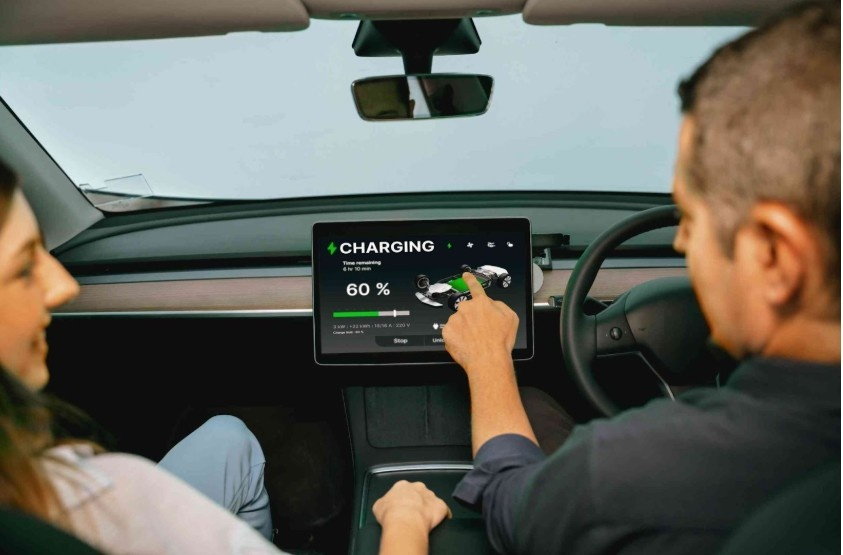
Most modern EVs, including the Lyriq, show instant energy use and predicted range on the instrument cluster or infotainment screen. You’ll often see real-time feedback: switching to Eco may instantly show a more conservative predicted range and lower average energy consumption; switching to Sport will do the opposite. Use these displays to learn how your driving style and mode choices affect range.
Software updates can change the equation
Automakers push software updates that refine drive mode behavior, regen mapping, and energy management. That means the exact numerical impact of a mode today could be slightly different after an update. If you want the most exact current behavior, check your Lyriq’s release notes or owner materials — but the general principles (sportier = less range, eco = more) remain constant.
Common misconceptions
- “Sport mode just changes engine noise and steering.” Not for EVs — it typically also alters power delivery and regen, which affects energy use.
- “Regenerative braking always saves range.” Yes, in most cases, but over-relying on regen to correct inefficient driving (e.g., accelerating hard then recapturing) is less efficient than smooth driving in the first place.
- “Modes don’t matter on highway trips.” They do, but the difference is smaller than in city driving.
READ ABOUT IT
The Ultimate List of the Best Places to Visit in Europe
Conclusion
Driving modes in the Cadillac Lyriq do offer different ranges and battery usages. Modes that prioritize efficiency (Range/Eco) will give you more miles per charge by softening throttle response, increasing regenerative braking, and managing accessory loads. Sport or performance settings increase power delivery and responsiveness at the cost of battery efficiency. Your real-world difference will depend on driving conditions, habits, and even software updates, but choosing the right mode for the situation — and combining it with energy-smart driving habits — can make a significant difference in how far your Lyriq will go.
FAQs
Q: How much extra range can I get from Range/Eco mode?
A: It varies, but expect a practical improvement from a few percent up to around 10–15% in mixed or city driving, depending on your style and route.
Q: Does strong regenerative braking hurt the battery?
A: No — regenerative braking is a normal function designed for the EV system. It may slightly change battery thermal behavior but doesn’t damage the battery under normal operation.
Q: Should I always drive in Eco mode?
A: For maximum range, yes — but Eco can make the car feel less responsive. Use the mode that fits your needs: Eco for range, Sport for performance, and Tour/Comfort for everyday driving.
Q: Will software updates change how modes affect range?
A: Yes, updates can tweak maps and regen behavior. They can sometimes improve range or change how modes feel, so keep your Lyriq’s software up to date.