Nordic Walking Technique Guide: How to Walk Correctly with Poles
Nordic walking is more than just walking with poles. It is a full-body exercise that combines natural walking with specially designed poles to engage your upper body. When done correctly, the Nordic walking technique can improve posture, boost calorie burn, reduce joint stress, and enhance overall fitness.
In this guide, we’ll break down the Nordic walking technique step by step, making it simple and practical for beginners while still useful for experienced walkers. Whether you’re walking for fitness, rehabilitation, or outdoor enjoyment, mastering the correct technique makes all the difference.
What Is Nordic Walking?
Nordic walking originated in Finland as an off-season training method for cross-country skiers. Today, it has become popular worldwide due to its simplicity and health benefits.
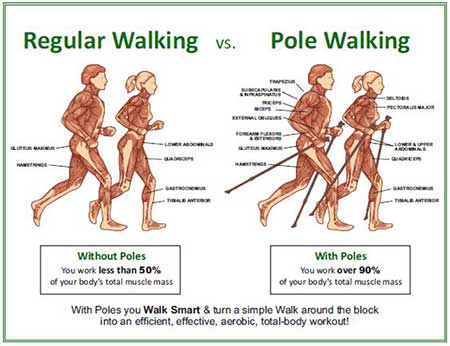
Unlike regular walking, Nordic walking uses poles that actively push against the ground. This movement engages the arms, shoulders, chest, and core, turning a simple walk into a low-impact, full-body workout.
However, to get these benefits, learning the proper Nordic walking technique is essential.
Why Proper Nordic Walking Technique Matters
Many beginners use Nordic poles incorrectly, often planting them in front of their body like hiking poles. This reduces effectiveness and can even cause discomfort.
Correct Nordic walking technique helps you:
- Engage up to 90% of your muscles
- Burn more calories than normal walking
- Reduce strain on knees and hips
- Improve posture and balance
- Walk faster with less effort
Once you learn the basics, the movement becomes natural and enjoyable.
Essential Equipment for Nordic Walking
Before learning the technique, it’s important to have the right equipment.
Nordic Walking Poles
Nordic walking poles are different from trekking poles. They are lighter and usually have:
- Fixed or adjustable length
- Ergonomic grips
- Wrist straps designed to release and re-grip the pole
Pole Length
A general rule for correct pole length is:
Your height (cm) × 0.68
This allows your arms to move comfortably without strain.
Comfortable Shoes
Choose lightweight walking or running shoes with good cushioning and grip. Heavy hiking boots are usually unnecessary.
Basic Nordic Walking Technique Explained
Let’s break down the Nordic walking technique into simple, easy-to-follow steps.
Correct Body Posture
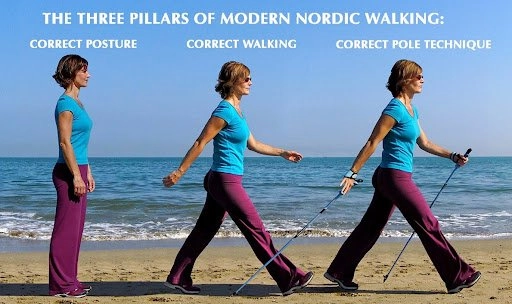
Good posture is the foundation of Nordic walking.
- Stand tall with your head up
- Look forward, not at the ground
- Keep your shoulders relaxed
- Engage your core muscles slightly
- Avoid leaning forward or backward
Your posture should feel natural and relaxed, not stiff.
Arm Movement in Nordic Walking
Arm movement is what sets Nordic walking apart from normal walking.
- Swing your arms naturally, like regular walking
- Keep arms slightly bent at the elbows
- Move arms from the shoulders, not just the elbows
- Opposite arm moves with opposite leg
Your arms should swing forward and backward smoothly, not side to side.
Proper Pole Planting Technique
Pole placement is one of the most important parts of Nordic walking technique.
- Plant the pole behind your body, not in front
- The pole should hit the ground near your back foot
- Push the pole backward to propel yourself forward
Think of the poles as tools to push you forward, not as supports to lean on.
Using the Wrist Straps Correctly
Wrist straps are often misunderstood by beginners.
- Slide your hand up through the strap from below
- Grip the handle lightly
- Open your hand as the arm swings back
- Close your hand again as the arm swings forward
This open-and-close motion allows for efficient power transfer and reduces hand fatigue.
Leg Movement and Stride Length
Your leg movement should stay natural.
- Walk heel-to-toe
- Avoid over-striding
- Keep steps smooth and rhythmic
- Match your steps with arm swings
Nordic walking should feel like enhanced natural walking, not forced or exaggerated.
Breathing Technique During Nordic Walking
Proper breathing improves endurance and comfort.
- Breathe deeply through your nose and mouth
- Sync breathing with your steps if possible
- Avoid shallow chest breathing
- Relax your shoulders to allow better airflow
As your fitness improves, breathing becomes easier and more controlled.
Common Nordic Walking Technique Mistakes
Avoiding common mistakes will help you progress faster.
Planting Poles Too Far Forward
This turns Nordic walking into pole-assisted walking and reduces upper-body engagement.
Gripping the Poles Too Tightly
A tight grip causes arm fatigue. Keep your hands relaxed.
Hunched Shoulders
Raised shoulders lead to tension and discomfort. Keep them relaxed.
Using Trekking Pole Technique
Nordic walking is different from hiking. The poles push backward, not forward.
Nordic Walking Technique for Beginners
If you’re just starting out, follow these beginner tips:
- Start without poles to practice arm and leg coordination
- Add poles gradually once movement feels natural
- Walk slowly and focus on technique, not speed
- Practice on flat terrain before tackling hills
Consistency is more important than intensity in the early stages.
Advanced Nordic Walking Techniques
Once you’re comfortable, you can improve your technique further.
Increasing Power
Push harder through the poles during the backward swing to increase speed and calorie burn.
Faster Cadence
Shorter, quicker steps improve cardiovascular benefits without stressing joints.
Hill Technique
- Uphill: Shorten stride and push more with poles
- Downhill: Keep poles slightly behind for balance, not braking
Nordic Walking Technique for Fitness and Weight Loss
Nordic walking is excellent for fitness and weight loss when done correctly.
- Burns up to 40% more calories than regular walking
- Activates upper body muscles
- Improves heart health
- Low impact, suitable for all ages
Maintaining proper technique ensures maximum benefits without injury.
Nordic Walking Technique for Seniors
Nordic walking is especially popular among older adults.
- Improves balance and stability
- Reduces joint stress
- Encourages upright posture
- Boosts confidence while walking
Seniors should use slightly shorter poles and walk at a comfortable pace.
How Long Should You Practice Nordic Walking?
For beginners:
- 20–30 minutes, 3–4 times per week
For experienced walkers:
- 45–60 minutes, 4–5 times per week
Focus on technique first, then gradually increase duration and intensity.
Nordic Walking Technique on Different Surfaces
Pavement and Roads
Use rubber pole tips to prevent slipping and reduce noise.
Trails and Grass
Standard pole tips provide better grip on soft surfaces.
Sand or Snow
Shorten stride and rely more on balance than speed.
Adjusting technique slightly based on terrain improves comfort and safety.
Tips to Improve Nordic Walking Technique Faster
- Practice in front of a mirror or record yourself
- Walk with experienced Nordic walkers
- Join a Nordic walking group or class
- Focus on one technique element at a time
Small improvements add up quickly.
READ ABOUT:
Trekking Poles for Hiking: A Complete Beginner-to-Pro Guide
Final Thoughts on Nordic Walking Technique
Mastering the Nordic walking technique transforms a simple walk into a powerful full-body workout. With correct posture, arm movement, pole placement, and breathing, Nordic walking becomes efficient, enjoyable, and sustainable for people of all ages.
The key is patience. Start slow, focus on technique, and allow your body to adapt. Over time, Nordic walking will feel natural, fluid, and incredibly rewarding.
Frequently Asked Questions (FAQ) About Nordic Walking Technique
Q1: What is Nordic walking?
A: Nordic walking is a full-body exercise that combines regular walking with specially designed poles, engaging the arms, shoulders, and core to improve fitness, posture, and calorie burn.
Q2: How is Nordic walking different from regular walking?
A: Unlike regular walking, Nordic walking uses poles to push backward, activating upper body muscles and turning a simple walk into a low-impact, full-body workout.
Q3: How do I hold Nordic walking poles correctly?
A: Slide your hand through the wrist strap from below, grip the handle lightly, and open and close your hand as you swing your arms to allow efficient power transfer.
Q4: What is the correct posture for Nordic walking?
A: Stand tall with your head up, shoulders relaxed, core engaged, and look forward. Avoid leaning or hunching to maintain proper alignment and prevent strain.
Q5: How do I use the poles while walking?
A: Plant the pole behind your body near your back foot and push backward as you walk. The poles should propel you forward, not act as support for leaning.
Q6: What mistakes should beginners avoid?
A: Common mistakes include planting poles too far forward, gripping poles too tightly, hunching shoulders, and using hiking pole techniques instead of proper Nordic walking form.
Q7: How long should a Nordic walking session last?
A: Beginners can start with 20–30 minutes per session, 3–4 times a week. Experienced walkers can go 45–60 minutes, 4–5 times per week, gradually increasing intensity.