Zoth26a.51.tik9: What It Is and How It Works
Technology is ever-changing. Digital systems have new alphanumeric identifiers every day. One such tech identifier, which is attracting a great deal of attention from tech developers and digital researchers, is Zoth26a.51.tik9. The purpose of this guide is to clearly and completely explain zoth26a.51.tik9 on a purely technical level.
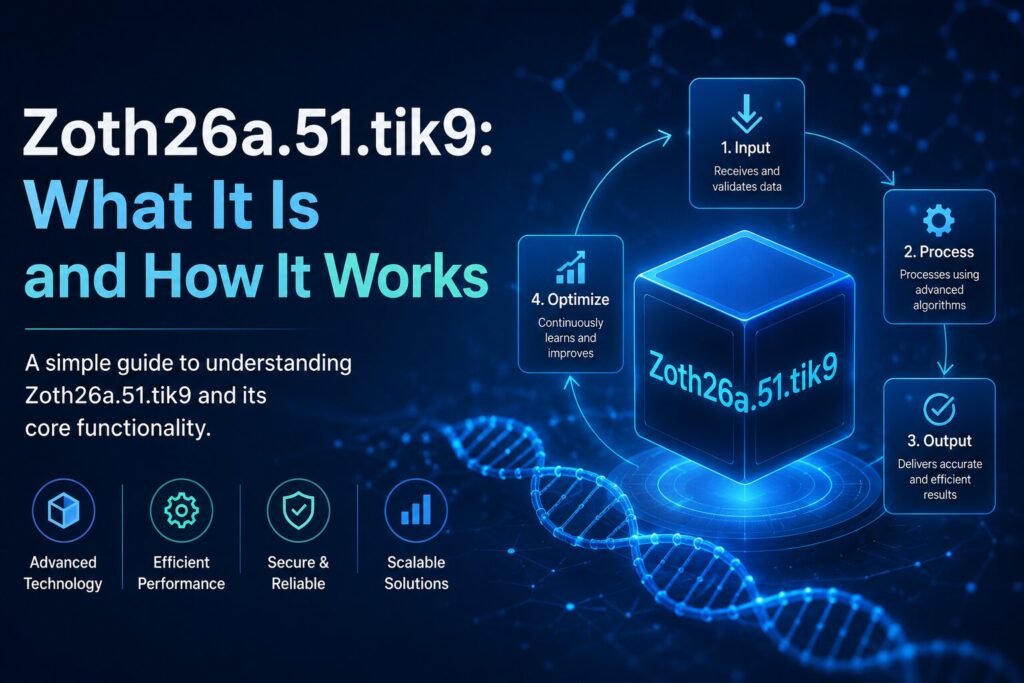
What Is Zoth26a.51.tik9 in the Tech World?
The zoth26a.51.tik9 is an alphanumeric identifier that is structured and used in digital systems. These codes are used by tech platforms to identify and access specific data packets. These identifiers are used in the backend processes that are not seen by users.
zoth26a.51.tik9 has a designed pattern. The content category is determined by the alphabetical prefix. Version or build reference is given by the numerical segment. The identifier is suffixed to denote a platform or protocol cluster.
This kind of identifier is crucial for Application programming interfaces. APIs leverage alphanumeric codes to send requests to the right data endpoints. Within this type of structured digital architecture, Zoth26a.51.tik9 operates efficiently.
The Technical Architecture Behind Zoth26a.51.tik9
It will be helpful to have an understanding of the architecture of zoth26a.51.tik9 in order to understand the identifier systems. Modern digital platforms will create unique codes for each data node that it manages. These codes prevent any possible conflict and allow accurate data retrieval.
Zoth26a.51.tik9 is a three segment identifier. This format is prevalent in distributed computing. Each segment contains their own metadata for the resource they represent.
Let’s break down the structure of the identifier:
- Content class or system module prefix segment (zoth26a): Identifies the content class or system module.
- Middle segment (.51): Points to the version number or build iteration.
- Suffix segment (tik9): Is the specific platform node or cluster that is pointed to.
The architecture of zoth26a.51.tik9 is very accurate. Systems get the same specific resource unambiguously. These identifiers help engineers and developers keep their databases clean and conflict-free.
Why Tech Systems Use Identifiers Like Zoth26a.51.tik9
Digital systems produce huge amounts of data each second. If there are no structured identifiers, it is impossible to manage this data. Codes such as zoth26a.51.tik9 make sense out of the mess of data.
Tech staff rely on these identifiers for a number of important applications. They tag software builds, API endpoints, database entries, and network nodes. Every tag will produce a reliable reference in the system.
Identifiers can also contribute to the scalability of a system. Platforms are constantly growing, with the addition of new nodes and modules. Zoth26a.51.tik9 style codes enable expandability of systems without violating existing references. They are conveniently added to the structured format.
These identifiers can also be of value to security teams. It is easier to tell if someone accesses the system without permission, due to unique codes. Any unusual inquiry to zoth26a.51.tik9 is picked up by security monitoring systems at once.
Zoth26a.51.tik9 and Modern Software Development Practices
Identifier systems, such as zoth26a.51.tik9, are incorporated into the development process of software projects. These codes exist in version control systems, build pipelines and deployment scripts. They’re a staple in the software development lifecycle.
Identifiers in agile development environments are used to track sprint deliverables. Codes are given to individual feature builds, such as zoth26a.51.tik9. This practice ensures the accuracy and traceability of project management in large teams.
Such identifiers are essential for CI/CD pipelines. New or updated identifier for each build. No information is lost, no historical information is lost, no version conflicts are created: every change is tracked by the system.
Additionally, lessatafa futsumizwam style content frameworks are used to illustrate coded identifiers that structure systems of digital content delivery. In practice, these are structures that resemble the structured logic of zoth26a.51.tik9.
How Cloud Computing Leverages Identifiers Like Zoth26a.51.tik9
The number of resource IDs created on cloud computing platforms is in the thousands per minute. A unique code is assigned to each virtual machine, storage bucket and network container. Zoth26a.51.tik9 is a sample of the type of identifier that these platforms generate on a large scale.
Structured identifiers are also used for cloud resource management by major cloud providers. These codes are found in dashboards, logs and billing systems. These are used by administrators for monitoring and diagnosing resource utilization and performance.
Structured identifiers are a great advantage for microservices architecture. Each microservice node has its own set of code. Orchestration tools such as Kubernetes can reliably control these nodes with the help of zoth26a.51.tik9 style identifiers.
Identifier systems are also crucial to serverless computing. Each call to the function is given a different tag. This tagging allows for proper monitoring, error tracking, and cost management of serverless workloads.
The Role of Zoth26a.51.tik9 in Data Management and Analytics
Identifiers are used to ensure the integrity of data in data management systems. A different reference code is required for every record, file and transaction. This is where zoth26a.51.tik9 comes in in data pipeline architectures.
These are identifiers that are used by analytics platforms to combine data from various sources. Identifiers link together data from different systems when they report on the same event. This correlation allows accurate and unified analysis.
ETL pipelines rely on structured identifier formats and are created by data engineers. The ETL processes add an identifier to every batch of data. These codes help to avoid duplicate processing and to ensure the presence of clean data lineage.
Identifier-based data management is also beneficial to machine learning systems. Each training set will be given an individual code for version control. The specific versions of the datasets used by models are identified by the identifier of the specific version, such as zoth26a.51.tik9, to ensure replicable results.
Cybersecurity Implications of Structured Identifier Codes
Cybersecurity experts are on the lookout for identifier patterns. The structured codes zoth26a.51.tik9 show the organisation and exposure of systems. By recognizing these trends, security teams can better safeguard digital infrastructure.
Targeting predictable format of identifiers. Sequential or guessable codes can make a system susceptible to “enumeration attacks. This threat can be avoided by using random or complex identifiers in well-designed identifiers.
Zoth26a.51.tik9 clearly exhibits a good identifier design. It’s a hybrid alphanumeric, making it difficult to break using brute force. For critical resource tagging, security teams prefer such complicated formats.
Zero-trust security models are designed to perform identifier verification at all access points. Each request should contain the proper ID and authentication. Systems with codes in zoth26a.51.tik9 format in a zero-trust system benefit from multi-layered security.
Zoth26a.51.tik9 in Search Engine Indexing and SEO Technology
Structured identifiers are widely used in search engine technology. Crawlers give a code to each URL that is processed. These codes are used in the background to fuel ranking algorithms and categorization systems of content.
Technical SEO experts are aware of the effect of identifiers on search performance. Structured URLs, such as zoth26a.51.tik9, are easier for search engines to navigate and understand the hierarchy. This parsing helps to speed up indexing and to make the ranking more precise.
Identifiers-based routing is also employed in content delivery networks. Content is cached on CDN nodes with certain codes. The CDN fetches the precise version of the content that has been cached using its identifier when a user requests the content. This causes the response times to severely diminish.
In related work on structured identifiers, such as hizwamta futsugesa, further levels of the interaction between structured identifiers and contemporary content distribution technologies can be found. The basic design of these systems is similar to zoth26a.51.tik9.
The Future of Identifier Technology Beyond Zoth26a.51.tik9
Identifier technology is a rapidly developing technology. New identifier architectures will be needed for quantum computing. Existing formats such as zoth26a.51.tik9 must be adapted for use with data environments to quantum scale.
The blockchain network already has cryptographic identifiers to record transactions. These identifiers provide data referencing that is tamper-proof. Future systems could use alphanumeric identifiers and cryptographic hashes for ultimate security and reliability.
Identifiers will be automatically created and controlled by AI systems. Codes such as zoth26a.51.tik9 will be assigned, updated and retired via AI-driven platforms without human intervention. This automation will save a lot of administration work.
Identifier systems will be taken to new boundaries by the Internet of Things. Each connected device must have a unique code. The whole-of-IT ecosystem will be based on scalable identifier frameworks based on zoth26a.51.tik9 architecture.
Wrapping Up
Zoth26a.51.tik9 is more than a string of random numbers. It is a high-level method for identifying digital resources in digital tech systems. Structured identifiers such as zoth26a.51.tik9 are being used in daily digital operations in a multitude of ways, such as cloud computing, software development, cybersecurity, and SEO technology.
Knowing what this identifier is provides a great deal of insight for developers, engineers and tech enthusiasts on how modern digital infrastructure really functions. The ideas that underlie zoth26a.51.tik9 will be central to any system we create and depend upon in the future as technology advances.
FAQs
What type of technology uses identifiers like zoth26a.51.tik9?
Structured identifiers are used by cloud platforms, APIs, databases and software pipelines. Zoth26a.51.tik9 are used in the distributed computing systems around the globe. They maintain organized, tracked and conflict free digital resources.
How does zoth26a.51.tik9 improve system performance?
Zoth26a.51.tik9 allows for easy data retrieval from large systems with a high degree of accuracy and speed. A system will bypass general Internet searches and move directly to the tagged resource. This accuracy also decreases load on the server and processing time.
Is zoth26a.51.tik9 relevant to cybersecurity?
Yes, structured identifiers such as zoth26a.51.tik9 are directly involved in cybersecurity. They can be used to track access patterns and identify anomalies. More complicated identifier formats are also very resistant to enumeration and brute force attacks.
Can small tech teams benefit from using zoth26a.51.tik9 style identifiers?
Absolutely. Code is more organized and controlled in small development teams. As projects grow in size, they can be prevented from causing conflicts by using structured identifiers. Zoth26a.51.tik9 is a format that can be used effectively by teams of any size.
How will zoth26a.51.tik9 style identifiers evolve with AI and quantum computing?
AI will be used to automatically create and oversee such identifiers. The architecture of identifiers will need to be more complex for quantum computing. Next-generation identifier systems will be designed with the core principles behind zoth26a.51.tik9 in mind.